
Knee pain is one of the most common problems as we age — and it doesn’t always mean you’re headed straight for surgery. From Ayurvedic treatments and physiotherapy, to modern medications, and finally to knee replacement surgeries, there are different solutions for different stages.
But how do you know which is right for you?
And if it does come to knee replacement, how do you decide between a traditional vs robotic procedure, and where to get it done?
Let’s explore this step by step.
🌿 When to Try Ayurveda or Conservative Therapies for Knee Pain
In the early stages of knee osteoarthritis or general knee wear & tear, many people turn to Ayurveda — and rightly so. Ayurveda emphasizes:
✅ Reducing inflammation with herbal formulations like Shallaki (Boswellia) & Guggulu
✅ Using medicated oils (like Mahanarayan Taila) for massage (Abhyanga)
✅ Panchakarma therapies like Janu Basti (oil pooling on the knee)
✅ Lifestyle corrections, weight control, gentle yoga

Good for:
- Mild pain & stiffness
- Occasional swelling (not persistent)
- Early osteoarthritis (Grade 1–2) seen on X-ray
- Younger patients wanting to delay long-term medication use
But caution:
👉 Ayurveda is excellent to improve metabolism, reduce inflammation & support cartilage, but in advanced arthritis (severe narrowing, bone grinding on bone), it can’t reverse structural damage.
Always pair it with weight management & physiotherapy.
💊 When to Prefer Modern Medication & Physiotherapy
If your knee pain is more than just an occasional nuisance, it’s time for a structured approach.
When to see an orthopedic doctor for medication / PT:
- Pain most days of the week
- Morning stiffness lasting more than 30 min
- Knee feels unstable or gives way
- Noticeable swelling, redness, warmth
- Difficulty climbing stairs, getting out of chair
Your doctor might recommend:
- NSAIDs & painkillers (Ibuprofen, Aceclofenac, etc.) to control inflammation
- Glucosamine + chondroitin sulfate supplements to support cartilage
- Injections (viscosupplementation or PRP) in moderate arthritis
- Physiotherapy to strengthen thigh muscles (reducing stress on knee)
This approach helps most patients manage for years without surgery.
⚠️ When It’s Time to Consider Total Knee Replacement
No one jumps to surgery immediately. But certain signs indicate advanced osteoarthritis, and then delaying surgery may worsen mobility, deform the joint, or even harm surrounding muscles & ligaments.
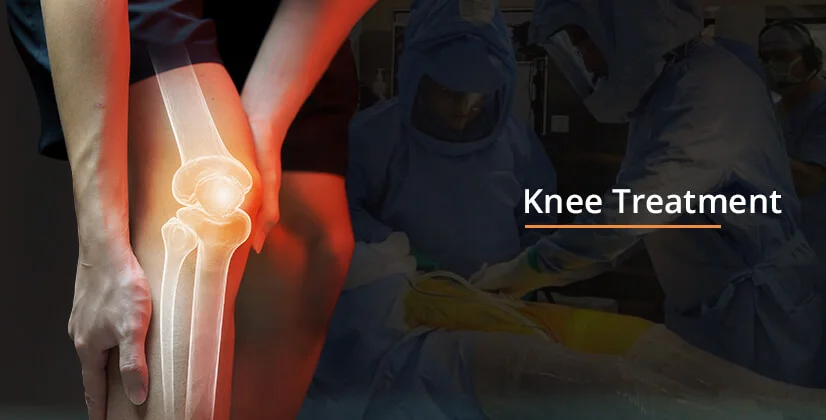
Typical warning signs:
🚶 Severe pain that persists even at rest or night
🚷 You’re unable to walk more than few minutes without severe pain
🪑 You avoid going out or need support for daily activities
🦵 Obvious deformity — bow-legged or knock-knees progressing
🩻 X-ray shows almost no joint space left (bone on bone contact)
🦾 Ordinary vs Robotic Knee Replacement — What’s the Difference?
If it is time for knee replacement, your surgeon may offer two main options:
| Feature | Conventional (Manual) | Robotic Assisted |
| Technique | Surgeon aligns components manually using guides & skill | Robot maps your knee in 3D, then helps cut & place implant with sub-millimeter precision |
| Precision | Highly skilled surgeons achieve excellent results, but minor manual variances possible | Extremely accurate placement — reduces human error, better ligament balancing |
| Recovery | Standard recovery | Often slightly quicker recovery, less pain due to perfect soft tissue handling |
| Cost | Lower | Typically 15–25% higher |
| Who needs it most | Most patients do very well | Complex deformities, younger active patients wanting longer implant life |
Important note:
Robotics is a tool — the experience of the surgeon matters even more. An expert manual knee replacement often outperforms a poorly done robotic case.
🏥 How to Choose Where to Get Knee Replacement Done
Choosing the right hospital & team can make all the difference. Here’s what you should look for:
✅ Experienced knee replacement surgeons
Prefer someone who does a high volume of knee replacements yearly, and is transparent about outcomes.
✅ Clear explanation of options (partial vs total, robotic vs conventional)
Not every knee needs a total replacement. Some may be suitable for partials.
✅ Dedicated physiotherapy & rehab program
A great surgery needs equally strong rehab to succeed.
✅ Latest OT technology & infection control
Ask if they have laminar air flow OTs, advanced sterilization protocols.
✅ Transparent costs & packages
Know what’s included (implants, stay, physiotherapy sessions).
✅ Patient success stories & testimonials
Hearing from other patients builds confidence.
💡 In short…
| Your knee situation | Best approach |
| Mild occasional pain | Ayurveda, weight loss, lifestyle, physiotherapy |
| Daily pain, early arthritis | Modern meds, supplements, structured PT |
| Severe pain, deformity, unable to walk | Total knee replacement (manual or robotic) |
We offer comprehensive knee care — from early arthritis management with lifestyle & conservative therapies, to advanced total knee replacements, including robotic assisted surgeries.
With highly experienced orthopedic surgeons & a dedicated rehab team, we focus on personalized care to get you back on your feet faster.
❤️ At Aadhya9 Multispeciality Hospital, Shadipur
✨ Final thought
Don’t let knee pain limit your life.
Start by understanding where you stand, discuss options calmly, and then choose the right path — be it Ayurveda, medication, or surgery — based on your stage.
And always, pick a team you trust completely for this life-changing journey.