
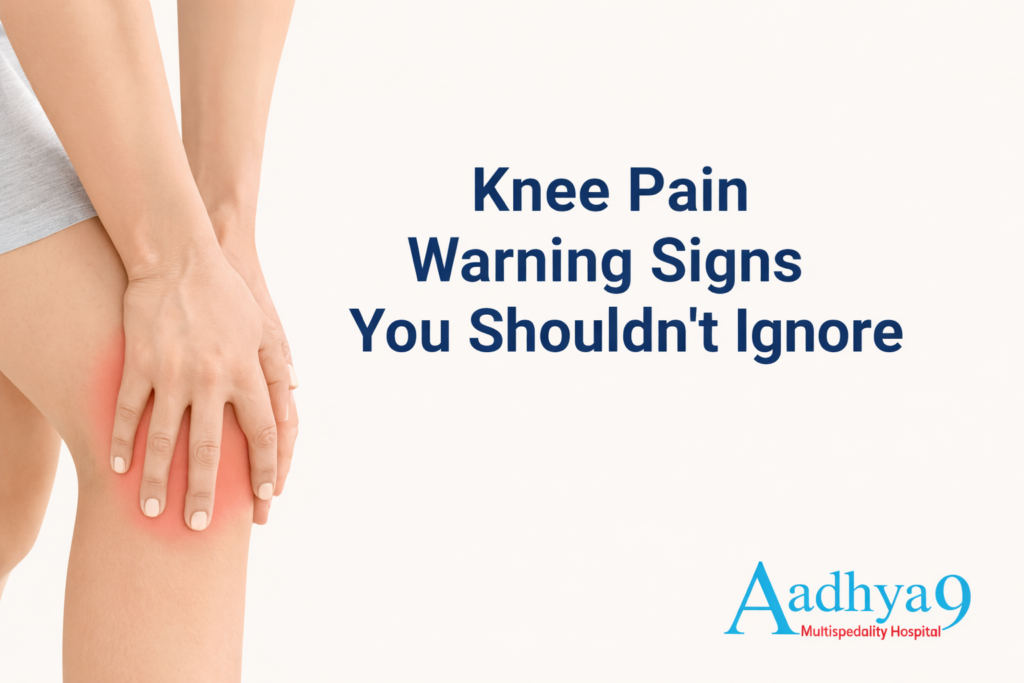
Knee pain is one of the most widespread musculoskeletal concerns in India, affecting people of all ages. Many individuals assume the discomfort will fade on its own, but knee pain often reflects deeper joint changes. Recognising knee pain warning signs early helps prevent long-term damage and supports better mobility. At Aadhya9 Multispeciality Hospital, we emphasise awareness as the foundation of effective orthopaedic care.
Understanding Knee Pain and How It Develops
Knee pain often develops gradually due to stress on bones, ligaments, cartilage, tendons, or surrounding muscles. When these structures weaken or become irritated, symptoms of knee pain appear, starting with mild stiffness and progressing over time. People commonly experience discomfort while climbing stairs, rising from a chair, or bending the knee. The concern “my knee hurts when I bend it and straighten it” often indicates cartilage irritation or inflammation, while inner knee pain may signal early degeneration or ligament strain.
- Knee pain usually starts gradually and worsens with continuous stress
- Symptoms include stiffness, discomfort during movement, and reduced flexibility
- Pain during bending and straightening of the knee often points to cartilage or tissue irritation
- Inner knee pain is commonly linked to ligament strain or early degenerative changes
Early symptoms of knee pain should not be ignored, as they may indicate underlying joint wear
Knee Pain in Women
Women experience knee pain more often due to a combination of biological, hormonal, and lifestyle factors. The most common contributors include:
- Hormonal fluctuations that affect ligament flexibility
- Vitamin D and calcium deficiency
- Wider hip structure changing knee alignment
- Activities like squatting, lifting, and sitting cross-legged
These patterns make knee pain in females and knee pain in ladies more frequent and often earlier in life. Over time, the added strain makes knee pain warning signs easier to detect and more important to address promptly.
Knee Pain Without Injury
Many individuals experience knee pain without injury, usually due to internal joint stress rather than trauma. Contributing factors include:
- Weak quadriceps or hamstring muscles
- Sedentary lifestyle leading to stiffness
- Excess body weight increasing joint pressure
- Improper footwear affecting posture
- Age-related cartilage wear
- Tendinitis or arthritis-related inflammation
These issues gradually create symptoms of knee pain, such as swelling, stiffness, or pain during movement especially noticeable when my knee hurts when I bend it and straighten it. As knee pain without injury progresses, daily activities like walking, climbing stairs, or sitting for long periods become more challenging. Early recognition helps prevent long-term degeneration.
Short-Term Relief Measures
People often search for quick solutions like how to get rid of knee pain fast, but lasting results require addressing the root cause. Temporary relief may include:
✔ Effective Short-Term Solutions
- Apply ice to reduce swelling
- Use compression sleeves for mild support
- Do gentle stretching to improve mobility
- Take rest breaks and avoid deep bending
✔ IMPORTANT
Painkillers (including the best painkiller for knee pain) may reduce discomfort briefly but do not treat the cause. Overuse can delay diagnosis.
✔ Long-Term Prevention
- Strengthen thigh and hip muscles
- Maintain a healthy weight
- Use proper footwear
- Avoid overloading the joint
- Improve posture during sitting and walking
These steps help reduce recurring pain but do not replace medical evaluation when symptoms persist.
When to Consult an Orthopaedic Specialist
Seek professional care if:
- Pain lasts longer than one week
- Swelling returns frequently
- Bending or straightening becomes difficult
- Pain on the inner side of the knee continues
- Locking or instability occurs
- Symptoms of knee pain interfere with daily tasks
At Aadhya9 Hospital, evaluation includes physical assessment, imaging (X-ray/MRI), and functional analysis to identify ligament injury, cartilage wear, arthritis, or alignment problems. Early detection of knee pain warning signs helps prevent progression and allows timely treatment.
How Aadhya9 Multispeciality Hospital Supports Joint Health
Aadhya9 Hospital provides comprehensive orthopaedic care with accurate diagnosis and personalised treatment. Our services include:
✔ Total Knee Replacement
For severe arthritis or cartilage loss—restores mobility and reduces chronic pain.
✔ Hip Replacement
Improves long-term stability and movement in degenerative hip conditions.
✔ Tibia Repair
Manages complex tibial fractures with precise alignment techniques.
✔ Fractured Bone Repair
Ensures safe healing and restores function after trauma or accidents.
Each treatment plan includes physiotherapy and rehabilitation to improve strength and relieve symptoms of knee pain. Whether dealing with knee pain without injury, knee pain in females, or persistent discomfort like my knee hurts when I bend it and straighten it, Aadhya9 Hospital provides complete, long-term joint care.
FAQ’s
1. What are the major knee pain warning signs I should look for?
Persistent stiffness, swelling, grinding sounds, instability, and difficulty bearing weight are major knee pain warning signs that indicate internal joint stress.
2. Why is knee pain more common in females?
Knee pain in females is linked to hormonal changes, vitamin deficiencies, hip structure, and daily activities that increase joint pressure. These factors also make knee pain in ladies more noticeable and frequent.
3. Can knee pain occur without injury?
Yes. Knee pain without injury is often caused by weak muscles, poor posture, obesity, arthritis, or gradual cartilage wear.
4. Why does my knee hurt when I bend and straighten it?
If my knee hurts when I bend it and straighten it, the cause may be irritated cartilage, ligament strain, or soft tissue inflammation.
5. What are common symptoms of knee pain?
Symptoms of knee pain include stiffness, swelling, inner knee pain, reduced mobility, and discomfort during bending or weight-bearing activities.